


Newfoundland minstrel Alan Doyle is on a 48-city tour across North America for his 20th album, Already Dancing, performing with the Juno-winning P.E.I. folk group The East Pointers in Canada and the Brooklyn-based Bandits on the Run in the U.S. Following a show at the National Arts Centre in March, Alan’s headlining the Fifty-Five Plus Lifestyles Show at the EY Centre April 11. His set list features a mixture of Great Big Sea fan favourites, traditional foot-stompers and a sampling of his own greatest hits.
By Rose Simpson
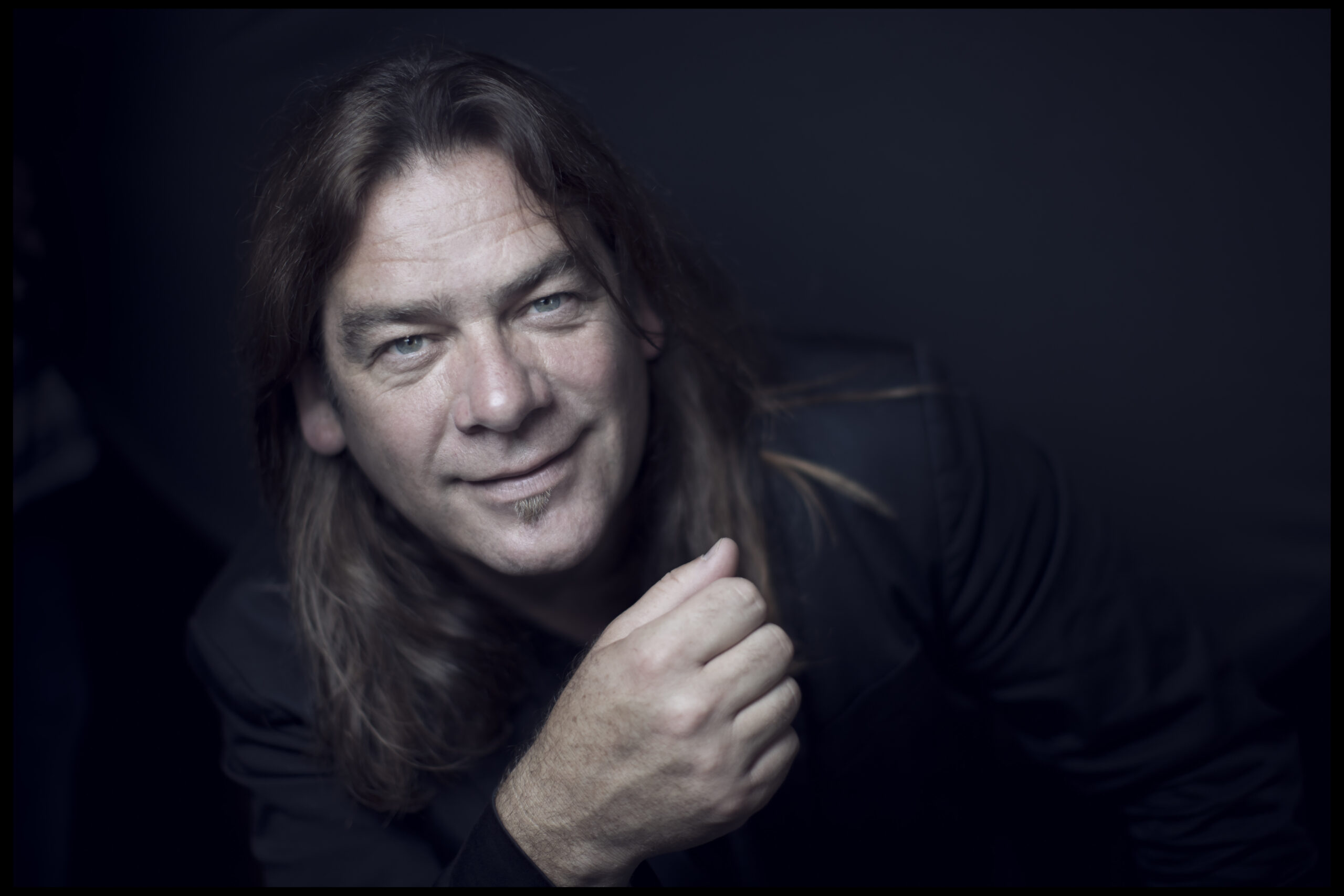
Some Newfoundlanders seem to be born with a destiny, whether it’s to fill the bellies of a crowd with Jigg’s Dinner at a local pub, jig the cod or build the boats that brave the frigid North Atlantic. Growing up, Alan Doyle was no different.
“I was born into the band,” says Alan, the wildly popular former frontman of the Newfoundland musical juggernaut Great Big Sea. “My mom was the organist, my dad and his brothers played guitar, and we provided the music at the local bars. We also organized the Christmas concerts and weddings and the dances and funerals.”
The son of Petty Harbour believes that kind of grounding is the special sauce that keeps the world asking for more of what it exports culturally to the world.
“Being from a musical place like Newfoundland, where music is in the air, we just have this canon of songs that almost everybody knows,” he says in an interview from his home in St. John’s. “You get good at it. And you have a kind of confidence because you’ve done it more.”
The proof is in the pudding. By the time Alan was in Grade 11, he had performed more than 300 times. By the time he made his first appearance on CBC Television, he had played more than 3,000 gigs across the country.
“One of our superpowers in Newfoundland is that we wake up in the morning with no expectation that the day is going to be easy. Everything is hard. I remember my father trying to make a 10-by-10 garden on the bone of Petty Harbour and putting fish guts in it, scraping dirt off rocks. In P.E.I., you pick up a handful of dirt, and by the time you get to the store, it’s a potato. And you probably kicked two lobsters on the way down.
“All these things add up to a perspective. It comes in the category of ‘nobody’s coming.’ We live on an isolated rock in the middle of the ocean, and work is hard, so you learn to entertain yourselves.”
The music resonates with Canadians, especially in small towns and places like the Prairies, that have a keen understanding of what ‘nobody’s coming’ means.
“It’s surprisingly eye-opening,” he says after crisscrossing his home and native land non-stop in minivans and tour buses for 30 years. “Back in the ’90s, we came rolling into Saskatchewan with an accordion and a Bahraini [stringed instrument], singing about boats and shipwrecks. We don’t have the same history; we don’t have the same culture, but we both fall into the category of ‘nobody’s coming.’ There’s no band coming from Chicago, there’s nobody coming to fix your tractor—so you gotta do it yourself.”
Despite their “pull themselves up by their bootstraps” upbringing, Newfoundlanders also experience a unique kind of privileged access, aided by a network of compatriots who can be found in every corner of the country and around the world.
 He believes Newfoundlanders have a unique joie de vivre borne from pulling fun out of the hard, cold ground and living a hardscrabble life.
“I don’t know if I ever played a gig in my life where somebody didn’t come by and ask, “Whatta y’at?” There is a built-in diaspora of people who will come and bring all their friends.”
No doubt about it. Newfoundland has whipped up a special sauce that’s to everyone’s liking. There are Newfoundlanders everywhere; they are front and centre across all media, from television (This Hour Has Twenty-Two Minutes, Codco, The Rick Mercer Report, The Republic of Doyle, Tom Power on CBC’s Q and who can forget the late great king of all media, Rex Murphy?
And of course, there is the music.
Great Big Career
For three decades, Alan Doyle has been at the centre of the explosive popularity of a blend of Celtic, folk, and party-down music, beginning with Great Big Sea.
At first, Great Big Sea was a bit of an oddity in the 1990s, a decade best remembered for its raw alternative grunge and hip-hop. But the boys—university pals Alan, Sean McCann, Bob Hallett and Darrell Power—soon built a loyal following playing dive bars and festivals as they travelled the country in dilapidated vehicles held together with duct tape and “equipped” with wipers that had to be manually operated.
Suddenly, Canadians couldn’t get enough of songs extolling the virtues of donkey riding and warning about the misguided courage fueled by old black rum. Soon, they were selling out hockey arenas and festivals around the world.
“I couldn’t have imagined, as a 15-year-old boy from Petty Harbour, that I would become intimately familiar with almost everywhere in the country of Canada,” says Alan, now 56. “That, in itself, could have been a dream come true—to travel like I have. To get to do that and play music for a living— that’s the dream of dreams, right? I’m 30 years into it, and what a privilege. And then to extend that to the U.S., Europe, Australia, New Zealand … It all ended up as a lucky, blessed life.”
Alan’s Version
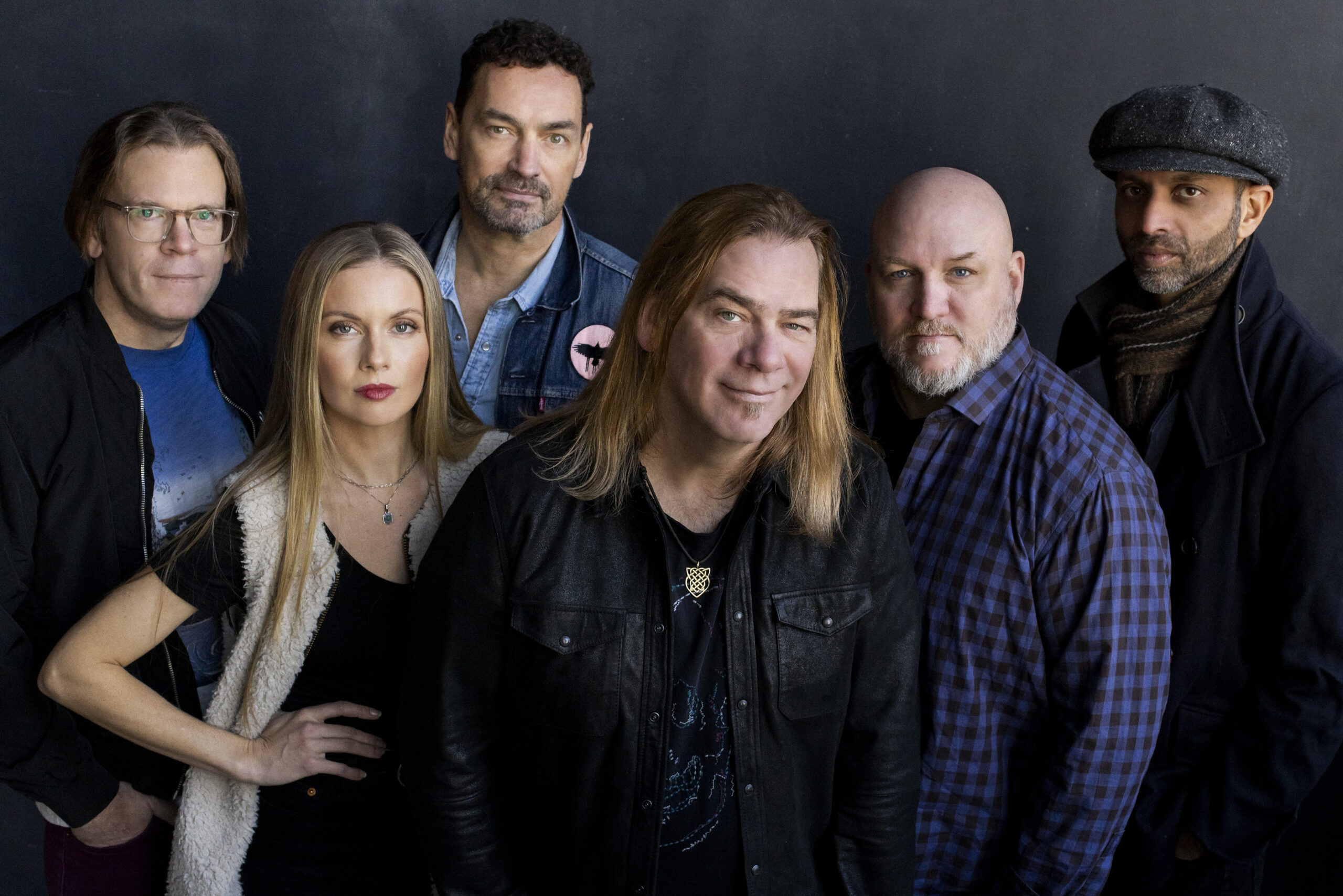
Even before the band stopped playing together in 2013—they really never officially broke up—Alan set his sights on solo projects.
Armed with the tools he was given at his father’s knee, he continued to hone his craft and create something magical: his own version of the traditional music that first made him famous. That, mixed with a winning personality and his signature shoulder-length dark locks, led him to a brush with Hollywood royalty and a breakout movie role in Ridley Scott’s Robin Hood (2010), starring Russell Crowe and Cate Blanchett.
“They needed an Irish-sounding fella who could play the lute,” he chuckles. “They wanted someone to play the Alan-a-Dale character, a guy who could sing the news. They invited me to a table read, and I had the lute against my leg. There were parts written into the script that were to be sung, but they didn’t have any music. In a couple of hours I made up some melodies, so they gave me the part.”
Robin Hood led to more roles in the productions of Republic of Doyle and Murdoch Mysteries, as well as gigs writing scores for a number of film and television productions. He was approached by a children’s group to make a record that had an East Coast sound. Then he wrote the music for and co-starred in a play based on the popular film Seducing Doctor Lewis at the Charlottetown Festival.
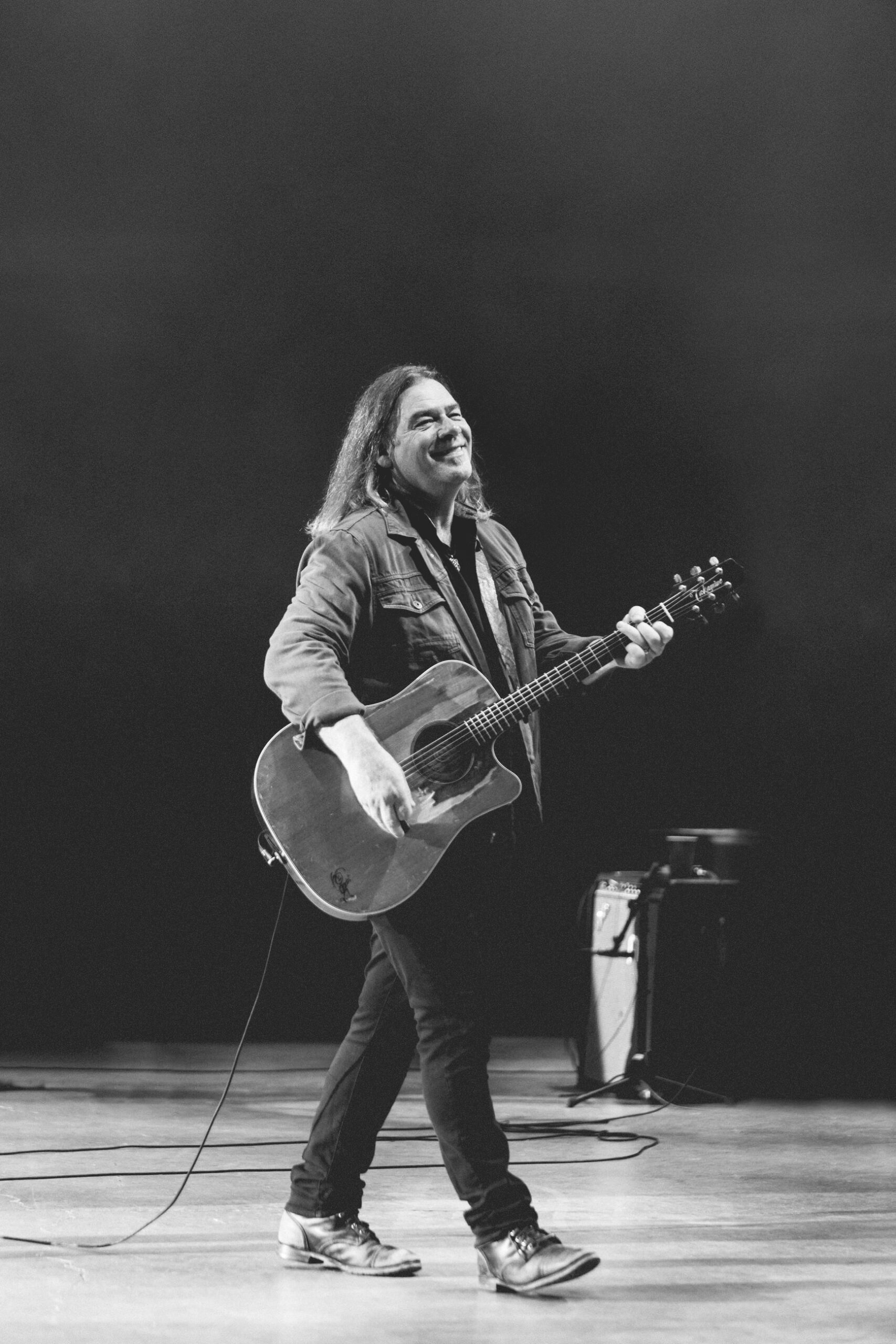
Never one to waste his downtime, Alan has also written four best-selling books about Newfoundland, including his most recent, The Smiling Land: All Around the Circle in My Newfoundland and Labrador, a travel book he describes as a “love letter to my own backyard.” It’s based on his sojourns across the province in a minivan (what else?) with his wife Joanne Pardy and their 17-year-old son Henry.
“It’s a big place to try to write about, and all the places are so varied and different,” he explains. “I had an honest curiosity to see if the new Newfoundland is still the same as the old Newfoundland, a place that hadn’t changed since my father was a kid. When I was born in 1969, it still wasn’t radically different than it was in 1950.
“My wife and I also had a desire to take our son around his own province. We realized that the time was growing short when we could get our little fella in a van with us and travel from St. John’s to Battle Harbour, Labrador.”
When asked about the dynamics of traversing the rock with a teenager in tow, Alan laughs.
“Joanne is smart and organized and moderately-tempered,” he explains. “And she’s used to living in a house with ADHD.”
Catch Alan’s show and meet him in person Saturday, April 11, at the EY Centre. Admission is free.

Photo: Sullivan Event Photography