

By Dan Lalande
As a youth, Andrew Manske would spend hours on the outskirts of the concrete jungle of Kitchener-Waterloo, in what remained of the wetlands upon which that community was built. There, he’d observe the painted turtles and redwing blackbirds living under the canopy of the old-growth chestnut trees.
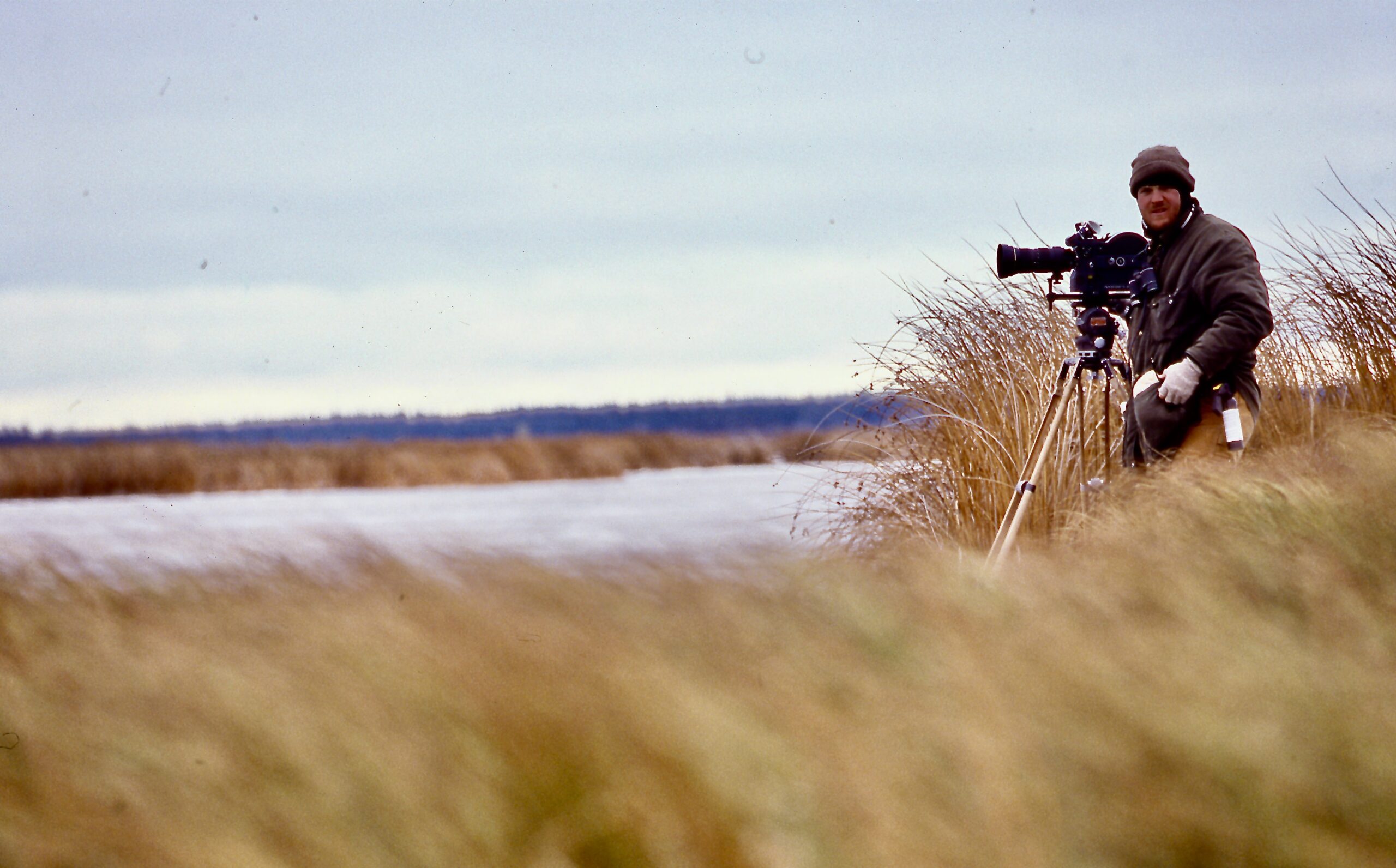
All too soon, that magical respite from man’s mania for urban development made way for communal amenities. It was the impressionable Andrew’s first lesson in the precarious status of the natural world.
His next came in high school, when a bird-loving teacher taught him how to sketch the surrounding species. Soon, Andrew the budding Audubon was paying as much attention to nature as he was his first love, sports.
But it was sports that got him behind a camera, when, as a precocious 16-year-old, he put in time at the community television station. Little did he know while shooting OHL hockey that he was developing the observational acumen that would distinguish him in his true calling: Wildlife cinematography.
He attended Confederation College, one of the few schools that taught 16 mm film technique. While his colleagues were trying their hand at studio-set drama, Andrew coerced his profs into letting him take the school’s gear out into the field. His painterly footage of aviary grandeur against scenic skylines earned him the nickname “Beauty Shot.”
And a job. In Edmonton, of all places, with one of the few production companies in the country making nature documentaries. Andrew’s first assignment for Karvonen Films, whose clients included the CBC and the NFB, was designed to determine if he indeed possessed the unique disposition it takes to survive in the profession. “To cut it in this industry,” Andrew explains, “you have to be a risk taker. Not just physically but in all ways. You’re telling somebody—a production company, a private investor, a broadcaster—that you’re going to go out and get something special. Each time you do that, you’re risking your reputation and your life.”
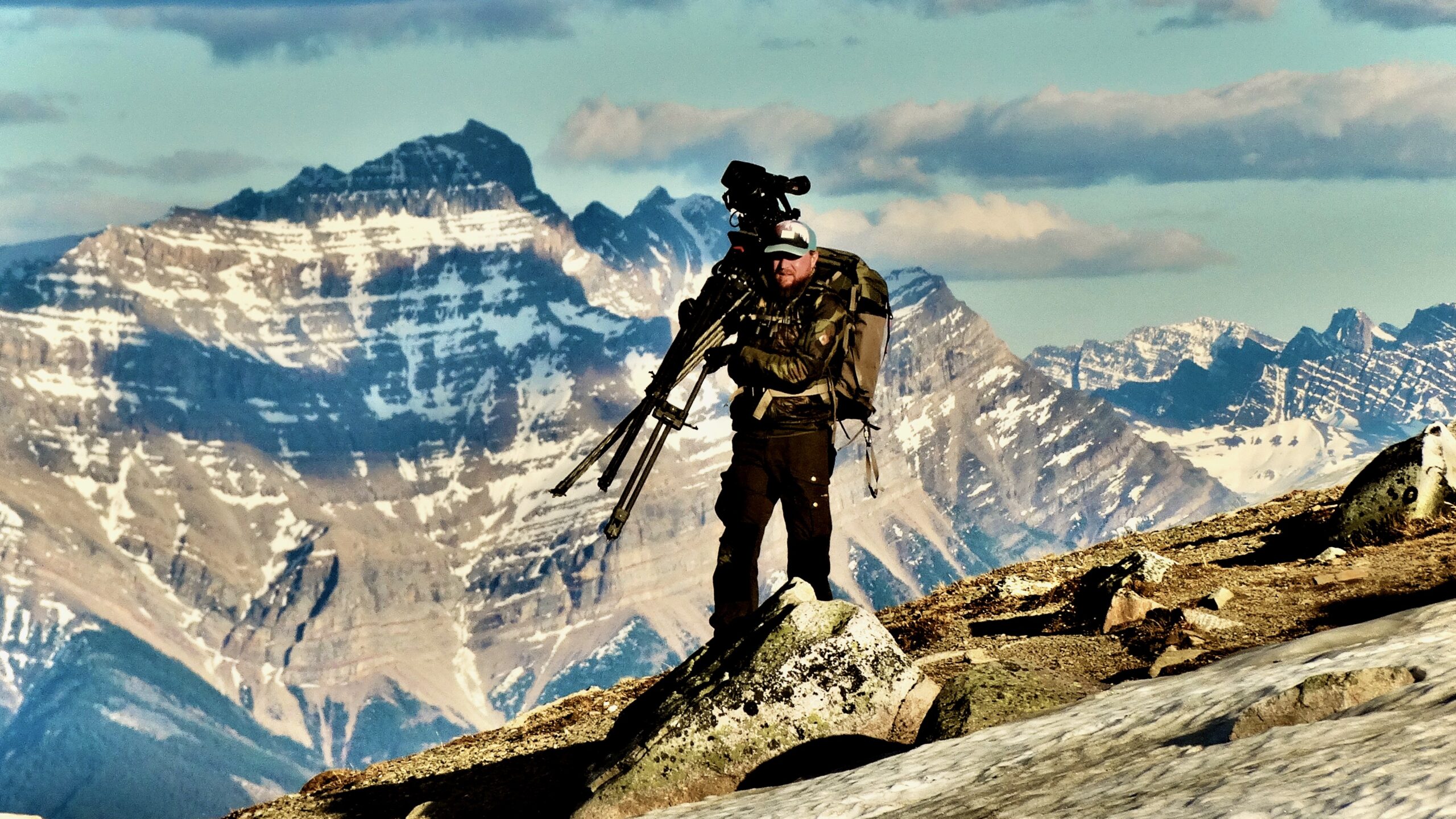
“Next,” continues the man who spends his time among bison, bears and wolves, “you have to do your research. It’s like sports. You watch films of the other team. In this case, that team is, say, bald eagles. You try and find patterns in their movement and behavior.”
To that end, Andrew often sets up small, unobtrusive cameras on an animal’s preferred pathways. After collecting the footage of, say, a hawk, he studies it like a hawk. After that, he sets up a blind at a strategic point, usually where they feed, and spends the next three to six weeks there, living as an informed spy.
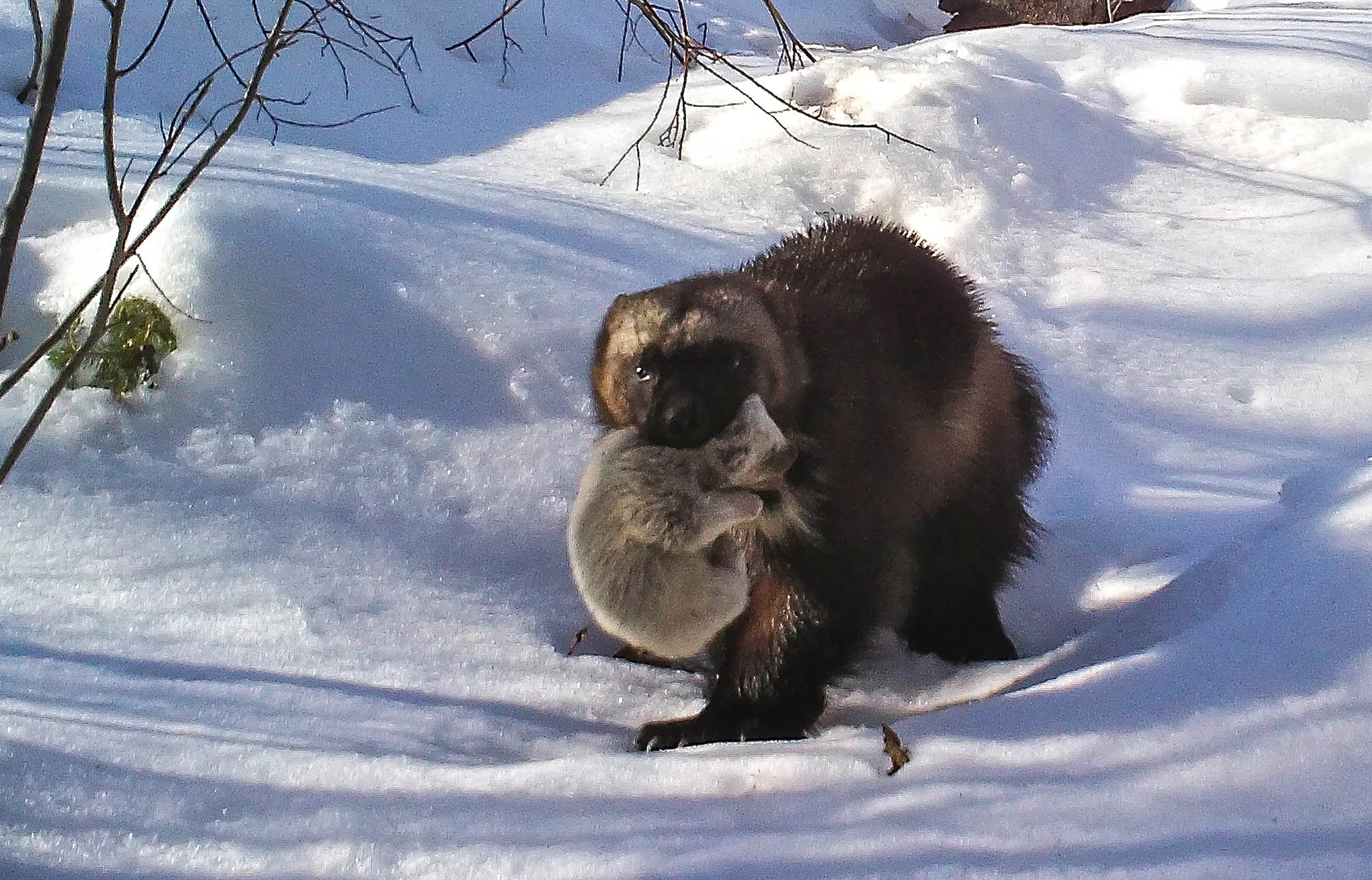
It’s the method by which he recently caught a rarity that upped his already considerable reputation: the only existing footage of wolverines in the wild. “They’re fascinating creatures,” he enthuses. “Each one, for example, has a distinct chest pattern. It’s their version of our thumbprints.”
Andrew’s wolverines were awarded an episode of Canadian TV’s top-rated The Nature of Things. Producers thought so much of his footage, they subjected him to over 40 live radio and TV interviews over a two-day period—an ordeal almost as trying as that of his first job.
“Albert Kervonen built me a 50-foot platform with a small, barely livable set-up on top. My job was to sit there for three days to shoot red-tailed hawks at nest level.”
Andrew did, of course, setting him off on a career path that wound through the Rockies, Alaska, and places in between, where he’s collected footage for Discovery, National Geographic, and David Attenborough.
“Another reason that my stuff stands out is that I have ADHD,” Andrew offers. “It’s my superpower. Not a leaf shakes without me being on top of it.”
“That said,” he adds, “it’s important to keep grounded. I used to be scared. Now, I try to send out an energy that I’m doing my own thing. Animals pick up on that and act naturally.”
There are easier ways to make a living, of course, especially when age pops into the picture. “I lift weights now,” Andrew concedes. “I’m finding it harder to lug 80 pounds worth of gear around. The biggest casualty, though, is the eyes. That’s not from the wild—it’s from having to watch screens all the time.”
Personal relationships take a hit, too. That said, Andrew has managed to leave a telling imprint on his grown sons, both of whom work in the conservation and film industries.
For the Manskes, caring and capturing the wild is in their nature.