


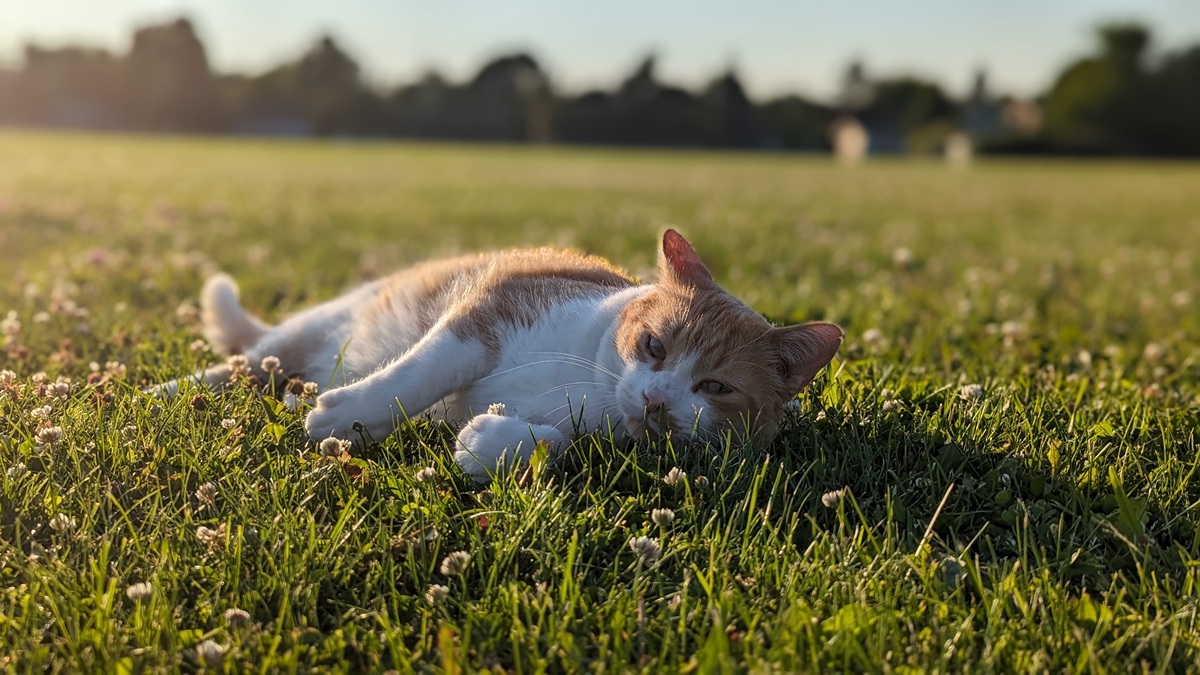
By Iris Winston
Together forever.
Look-alike sisters Pitter and Patter were part of the same litter, born to a stray cat who was pregnant when she was rescued.
The rescuer was happy to keep the mother cat and was able to find a suitable home for the only male in the three-kitten litter. It was also clear that the two remaining kittens belonged together. They spent every waking moment close to each other and, on the rare occasions that they were out of each other’s sight, went looking for each other. They slept together or relaxed by curling up together, cuddling or grooming each other. They ate together, often out of the same bowl.
Their constant companionship demonstrated that they were a closely bonded pair who would be happy only if they stayed together. Therefore, it was very important for their well-being and contentment that they should go to the same loving home. Fortunately, friends of mine not only fully understood how much the kittens cared about each other, but also actually wanted to adopt two cats.

Pitter and Patter—named perhaps for the sounds their paws make as they trot around their new home with each other—have been happily settled for a couple of months now. As well as napping and cuddling with each other, after exploring every inch of the house daily, they are also snuggling with their humans and generally bringing joy to the household.
It is lovely to see connections such as this work out perfectly, but, while bonded pairs are not uncommon, particularly among a pair of kittens that are part of the same litter, neither is friendship between two or more animals automatic.
People sometimes assume that their cat or dog could be lonely and would benefit from having a companion. Maybe, maybe not. That depends on the personalities of the animals and their previous experiences, especially if one or both are rescue animals.
A couple of acquaintances of mine brought a second cat into their home to give their two-year-old cat a friend. In fact, they apparently introduced two enemies to each other and turned the household into a war zone for several months with regular sneak attacks between the cats. The chaos was eventually brought under control (although the cats were renamed Ruckus and Mayhem to fit the new ambience).
Friendship was never on the cards for these two, although they finally tolerated each other’s presence— usually in different parts of the house. A version of establishing their own territory, this was underlined by arched backs and the occasional hiss and spit if either crossed the other’s invisible territorial line.
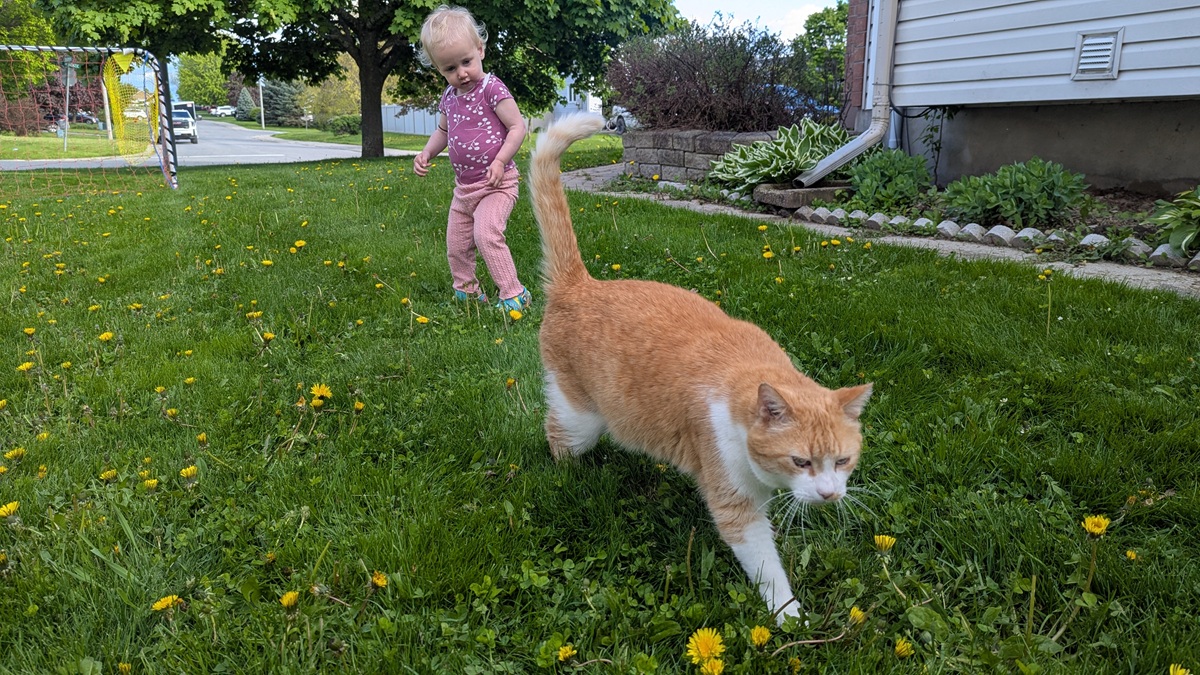
I also know of a couple of households in which their dogs or cats must be put in different rooms behind closed doors when their humans are not there to act as referees. Separation may be a practical temporary solution for a visiting animal, but it can be very stressful for permanent residents, whether they have two legs or four.
In yet another version of a new member joining a household, my then 15-year-old Norwegian forest cat brought home a hungry stray cat, expecting me to take him in. It took several months to persuade Rufus to come inside, but he is now a very contented cat and very much part of the family.
In the happy case of little Pitter and Patter, they were introduced to the resident dog, an eight-year-old Havenese, with great care. Because the family understood the importance of considering all the animals’ feelings, the introductions were handled in a very measured way. Their versatile X-pen was used to give the cats a safe space and allow the dog to see them, while she was being stroked by her favourite human. By the time the space reserved for the cats had expanded to cover the entire house, the three were entirely used to each other. At this point, they are nodding acquaintances, not quite a threesome but at peace with each other.
Almonte, Ontario, writer Iris Winston is a former executive director of the Canadian Federation of Humane Societies. She has been an animal lover all her life. Her pets have always been important members of her family.