


By Jena Lynde-Smith
Six months ago, I became a mom.
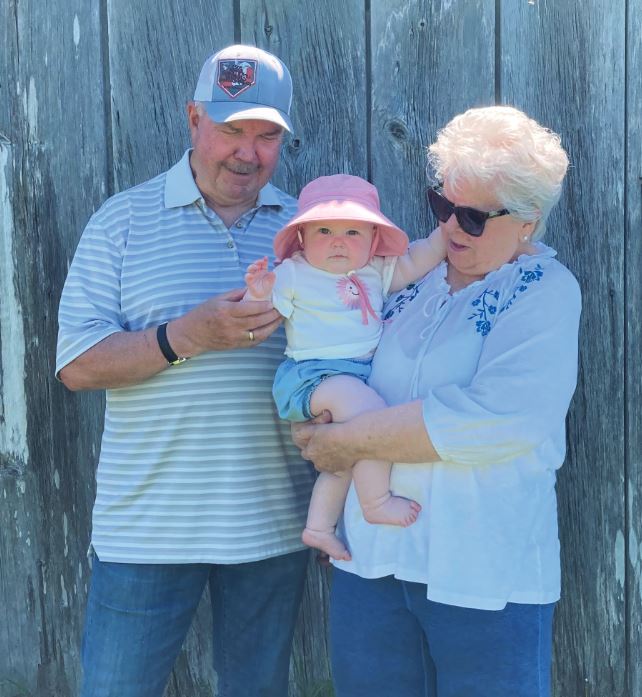 Like most first-time parents, I expected the sleepless nights, endless diaper changes and steep learning curve. What I didn’t expect was how much the support—or lack thereof—from the people around us would matter.
I’ve been fortunate. While my own parents live a good distance away, my in-laws have been incredibly supportive since the moment we announced our pregnancy. But in conversations with other new parents, I’ve learned that isn’t always the case. In fact, one common theme seems to be true: The relationship between new parents and grandparents can become one of the greatest sources of comfort while navigating parenthood—or one of the biggest sources of stress.
Curious about what actually makes a good grandparent in those early newborn months, I spoke with two first-time moms about their experiences. Their answers were thoughtful, honest and surprisingly consistent.
Supporting the parents is more than holding the baby
For Amy Lam, who welcomed her daughter eight months ago, the grandparents who made the biggest difference were the ones who focused on supporting the parents, not just spending time with the baby.
“The most genuinely supportive thing a grandparent can do in those early days has nothing to do with the baby,” Lam says. “It’s taking care of the mother.”
Amy remembers her mom quietly stepping in to handle meals, household chores and small acts of care that made a huge difference during the exhausting newborn phase.
“Not having to think about my next meal or a pile of dishes meant I could just be fully present with my baby,” she said.
Cassie Malik, a mother to an almost-two-year-old-boy, had a similar experience. Rather than arriving expecting baby snuggles, her mother looked for practical ways to help around the house, folding laundry, tidying up and tackling tasks that had fallen by the wayside. She also tried to make their house as baby-friendly as possible.
“My mom bought a bouncer, play mat, high chair, crib,” Cassie says. “Things that were a lot for me to bring myself, she made them available at her house so when we visited we had things we needed.”
Parenting styles have changed, and that’s OK
Many new parents today are navigating recommendations that look very different from the advice their own parents received decades ago. From safe sleep practices to the debate over whether babies should be left to “cry it out,” parenting advice has evolved significantly.
“One of the biggest shifts between older parenting philosophies and modern parenting is the concept of ‘spoiling’ a baby,” Amy explains.
 Many grandparents were taught that babies should learn independence early. Today’s parents are more likely to respond quickly to a baby’s cries and prioritize secure attachment. Research has played a role in that shift. The Canadian Paediatric Society says secure attachment develops when caregivers respond to babies in warm, sensitive and consistent ways. The idea is that dependence builds independence.
“Responding to a baby’s needs, holding them, comforting them: That’s not indulgence, it’s development,” Amy says.
But for both women, the issue isn’t really about sleep sacks, feeding recommendations or attachment theory. It’s about respecting parents’ choices.
“My mom always asked me, ‘How are you supposed to do X now?’ or ‘Do you guys still use X?” Cassie says. “She wanted to know what is different about parenting out of genuine curiosity and wanting to learn, not to compare or shame.”
For Amy, respecting boundaries comes down to one simple principle.
“The most supportive thing you can do is follow their lead, even if it looks different from how you did things,” she says
Cassie believes grandparents don’t need to understand every parenting decision, but they do need to respect it.
“You’re more likely to get to babysit and spend time with the baby if you just go with what the parents are asking,” she said.
Love your child, first and foremost
Ultimately, both women believe the strongest grandparent-grandchild relationships are built on a strong relationship between grandparents and their adult children.
“My advice to first-time grandparents is this: Nurture your relationship with your adult child first, and the relationship with the grandchild will follow naturally,” Amy says.
Cassie shares a similar perspective.
“The nicer, more helpful, supportive, etc. you are to the parents, especially the mom, the closer your relationship with their child will be,” she notes.
Amy credits her mother’s philosophy.
“I’m going to take care of my baby, so you can take care of yours,” she told her.
In the early days of parenthood, every family needs a village. Long after the diapers, feedings and sleepless nights are forgotten, new parents will remember who showed up— and how they showed up. The small acts of support offered in those fragile early months often grow into something much bigger: Trust, closeness and a lasting place in a child’s world.