

By Dan Lalande
As a teenager in Northern Quebec, Michele Castonguay listened to pop, rock and disco. That changed with a flick of her radio dial, the one that sent a live jazz concert through the device’s tinny speaker. Intrigued by the intricacy of the music, Castonguay found herself rifling through a different section of her local record store, the one that stocked such iconic jazz vocalists as Sarah Vaughan and Anita O’Day.
 Little did she suspect that her interest in those recordings was planting seeds that would take 40-plus years to germinate, when they would blossom into the melodies, embellishments and percussive contributions she would display as an up-and-coming fixture on the Ottawa jazz scene.
Back in the many places where the Armed Forces brat grew up, had anyone told Michele that she would someday be a singer-in-demand, the long-haired brunette might have broken out into the reflexive giggle that lightens even her most earnest responses. That said, she concedes to once having experienced a tell-tale twinge: “I remember auditioning for a musical back in high school,” she shares. “Even though I barely sang at the time, when they gave me a non-singing part, I was cheesed.”
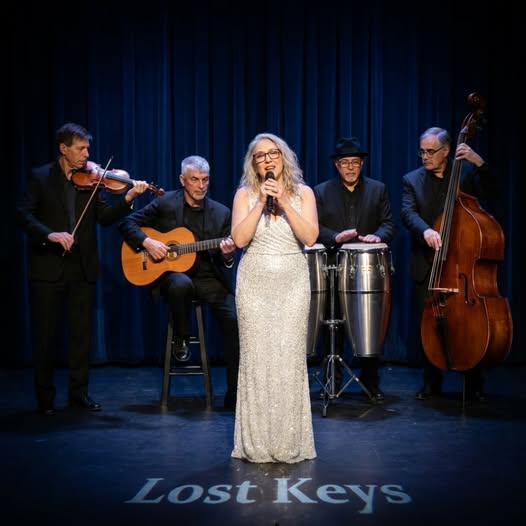
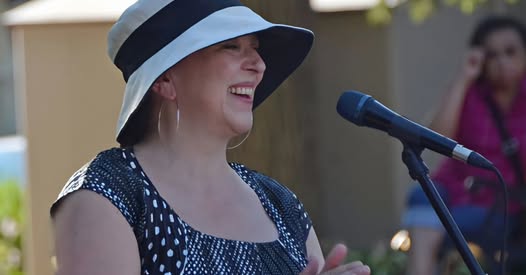 Whoever was responsible for that decision should pop by Bank Street’s Jazz 248, the musical cooperative where Michele sings on a regular basis. Or they can catch her with one of the three bands with whom she otherwise performs: The Lost Keys, The Killer B’s, and The Jazz From Everywhere ensemble. “I try to play with different musicians, try different styles,” she explains. “Right now, I’m looking to expand beyond the jazz standards to mix in some R&B and folk-bluegrass harmony.”
Michele is not alone. The current pantheon of female jazz vocalists is re-imagining the music. Among Michele’s favourites is Veronica Swift, the award-winning, cross-genre wunderkind who made her first recording at the age of 11.
Anybody would be a latecomer compared to that, but the prospect of retirement was what propelled Michele to, musically, make good on her bravely innocent approach to life: “I just put myself in the path of things and hope for the best.” That’s how, on the recommendation of a friend’s mother, she put her B.A. in psychology on hold (earned later, along with a PHD in health sciences) to enter the then-new field of sleep studies.
“At the time,” Michele recounts, referring to the late ’80s, “it was almost completely under the radar. But it boomed in the ’90s after Oprah Winfrey devoted a show to it.” A boom that, for Michele, became a boon: 38 years as a registered polysomnographic technologist, working out of the Ottawa Hospital’s General campus, its Civic campus and CHEO.
In her spare time, she and her culture-vulture husband, comedian and writer Rick Kaulbars, would find themselves at Friday’s Roast Beef House, then the city’s leading sing-along lounge. Singled out by the kindly house pianist, Noel Dimar, Michele braved a tune or two. Like one of her somnambulant patients, she suddenly woke up.
Determined to build a fire from a spark, she attended the annual, week-long summer camp put on by Ottawa’s own JazzWorks, an event that attracts musicians of all levels like black flies. While the prospect gave her the jitters, she needn’t have worried. “They keep you so busy, you don’t have time to be self-conscious about where you might be talent-wise.” After that, she studied on and off with some of the city’s charter chanteuses, including Kim Kaskiw and Elise Letourneau.
While Michele still studies and rehearses on a regular basis, she admits, “I prefer on-the-job training. That’s why I try to play as many gigs as I can.” Her fellow musicians, in turn, learn from her: Michele doesn’t sing in book key, forcing a greater degree of collaboration within the band. Once that’s ironed out, Michele, whether she’s performing at a restaurant or an outdoor venue or somebody’s wedding, generally loses herself in the music. There’s one aspect of the art, however, she still struggles with: “Believe it or not,” she confesses, “the hardest part isn’t the breathing, the relaxing or the phrasing. It’s connecting with the audience while you sing. You’re so preoccupied with the songs, your technique, and the other musicians that, ironically, you can start to feel distanced from the people that you’re doing it for.”
Fortunately, Ottawa’s audiences have no such problem. They’re more than happy to sit, listen and be drawn closer.