


Now and Then
By Iris Winston
Photos by Hannah Lopes
Children’s stories carry a book-load of happy memories with them. It doesn’t matter whether you are recalling a favourite book from your own childhood or revisiting one of the many bedtime-story sessions when you were reading to your child or grandchild.
 Among my most treasured story-time memories are the physical and emotional closeness we felt when I was reading to my preschoolers just before they settled down at night or, a couple of years later, when they read a story to each other as part of their bedtime routine. Then there were the times when, at around six and seven, they rushed in at the end of the school day, anxious to hear if I had written a new story for them. Their enthusiasm led to the completion of several tales that were published long after they were no longer interested in reading stories written for their younger selves. But the happy memories lived on and one of those stories went on to become a children’s play and later still a musical.
Both writing and reading open worlds of imagination and give different generations the opportunity to share in a variety of ways. Even more important, the greater the exposure that youngsters have to any genre of storytelling, the more likely they are to become dedicated readers themselves, as well as to stretch their imaginations to creative possibilities. And, despite all the electronic distractions along the way, reading remains a direct route to comfort and success in school, whether a child takes an academic, artistic, technical or practical path in the future.
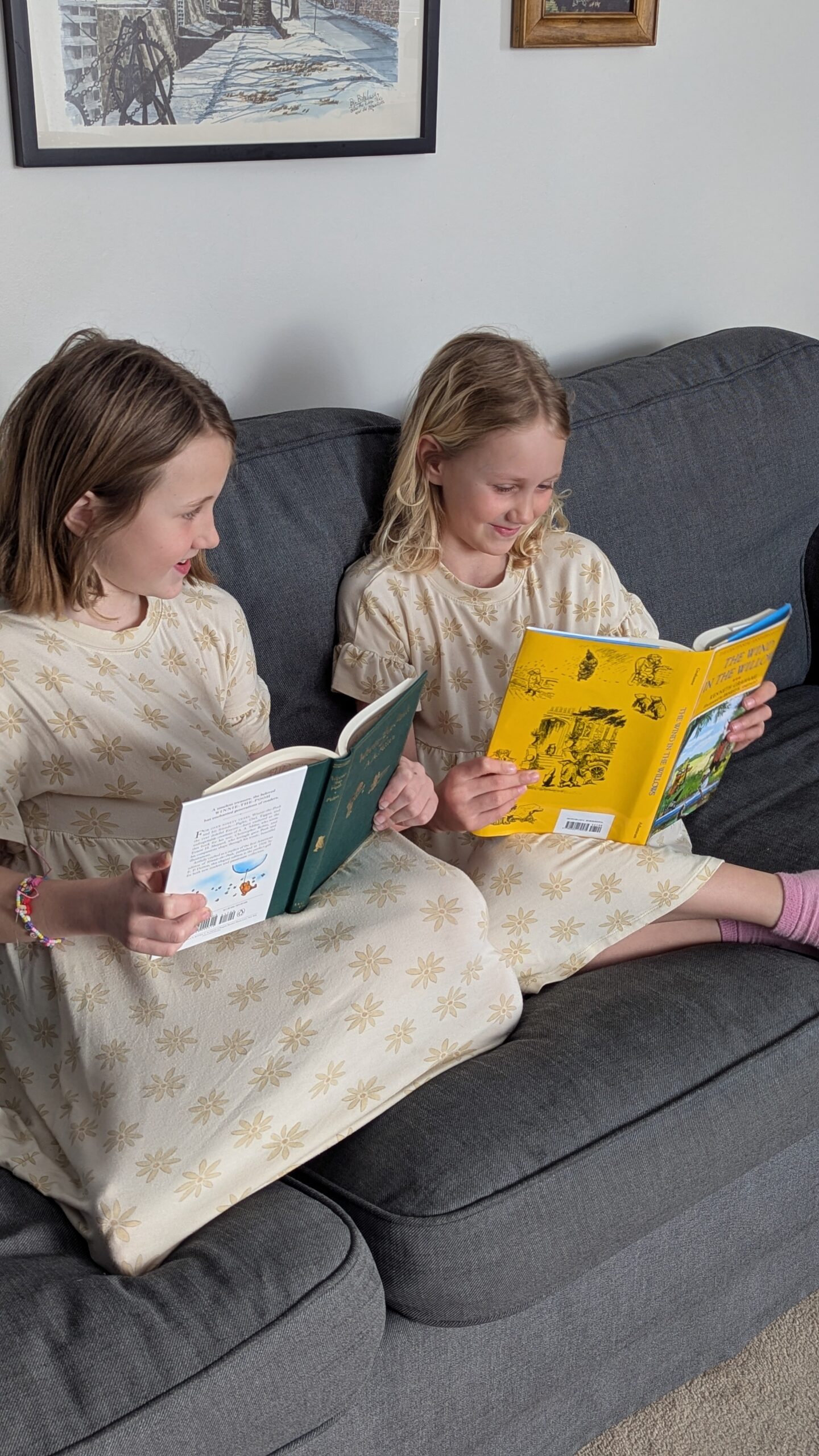
Such classics as The Wind in the Willows by Kenneth Grahame (first published in 1908) or Winnie the Pooh by A.A. Milne (celebrating its centenary in 2026) remain timeless. Even the fact that the character of Pooh was based on a teddy bear that Milne had bought for his son, Christopher Robin, adds to the magic of the story and the Disney animated versions that followed.
I still remember details of many of the favourite books from my childhood, as well as those that delighted my children when they were very young. Several picture books were committed to memory—theirs and mine—because they were repeated so often. Do you recall P.D. Eastman’s Are You My Mother? or Dr. Seuss’s Green Eggs and Ham, for instance?
But I am not as well versed in more recent children’s books or even of current preferred subject matter. As I’m hoping to try my hand at writing for children again, I sought some guidance on what young readers enjoy today.
Where better to begin my research than with help from my two very special young neighbours, eight-year-old Adeline (Addy) and seven-year-old Ava?
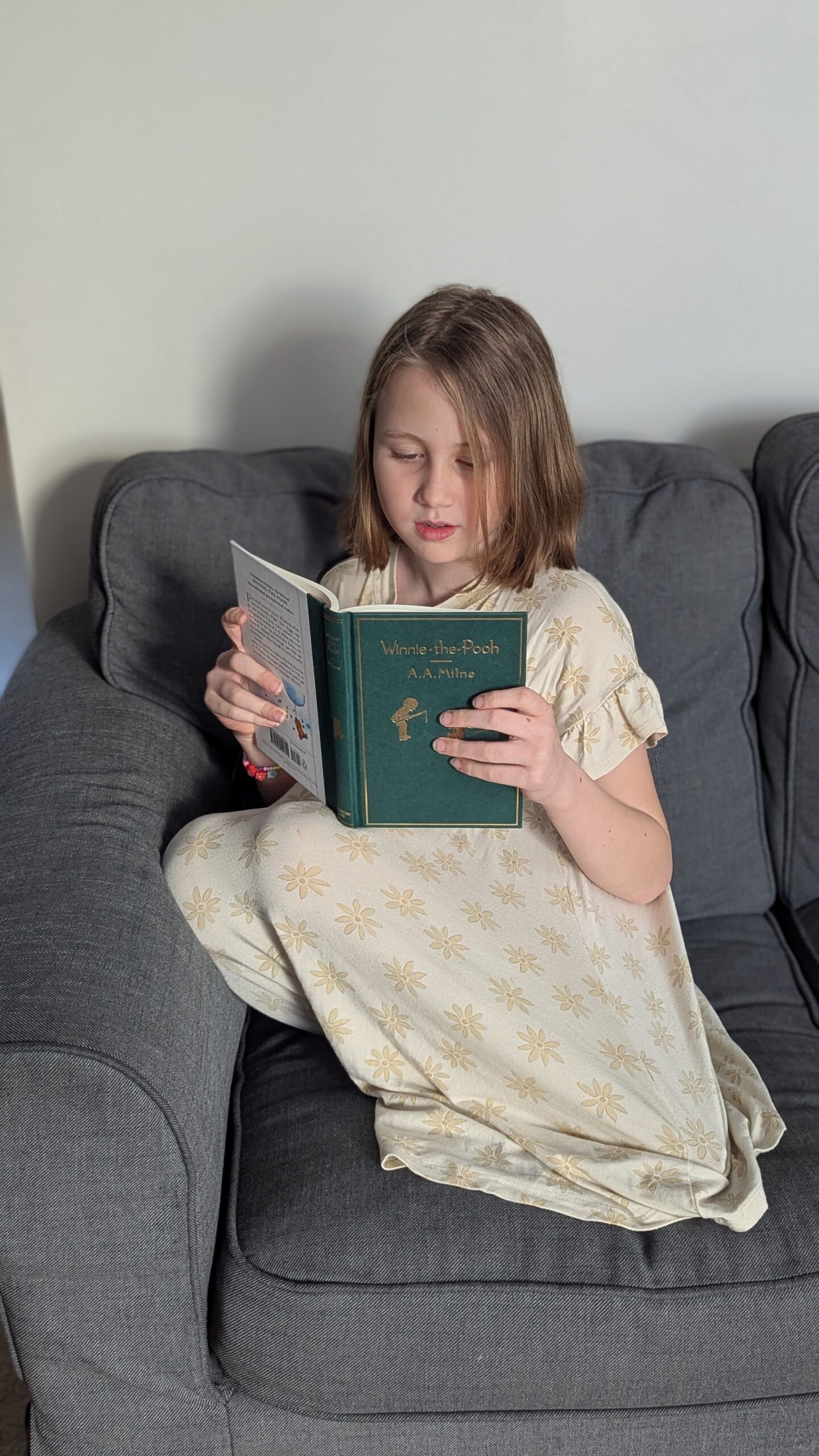 Addy’s first comment, as the three of us chatted, was that she does not like books to begin with conflict but prefers the scene to be set first. Particularly in children’s books, she says, you need the context to be established to make the reason for any conflict clear. Ava nods, agreeing that character and background descriptions coming first make a story clearer for her.
Addy, an avid reader, tends to read books intended for older children. In many of these stories, conflict is presented early on, she says. “That seems to be how it is in books for older readers, so I’ll just have to get used to it.”
Both girls enjoy having some illustrations in the books they read, but not too many, warns Addy. “I read in my head and I like making pictures in my head, too.”
I know just what she means. An illustration that shows a character looking very different from the one you imagined as you read can be really off-putting. It is as much of a communication block as an unfamiliar or awkward word in hindering the flow of the story.
In terms of subject matter, Ava says she particularly likes stories involving dogs because she loves animals, particularly dogs. “I like reading about animals communicating with each other and with their owners,” she says, adding that The Diary of a Pug series by Kyla May, which recounts the adventures of Bub and his human companion, Bella, fits the bill perfectly.
Addy, whose bedroom reading corner is one of her favourite places, recently finished reading the Little House on the Prairies books, the autobiographical series about 19th-century homesteading by Laura Ingalis Wilder, first published in 1932.
“I like reading about museums, too, because I like stories about ancient times,” says Addy. “I also like reading about mermaids. Of course, I know they’re not real, but I like having a little magic in a story—just not too much. The magic has to blend with reality.”
That, she says, is exactly what she finds in A Taste of Magic by J. Elle. It is probably one of the reasons she finds it more interesting than J.K. Rowling’s Harry Potter books.
“I find Harry Potter too simple,” she says. “I have to read very simple books at school. I just read them very quickly. Teachers judge by your grade how good a reader you are.”
You can form an even better idea by hearing children’s views on the reading matter they enjoy. And as Addy and Ava continue exploring the great world of books, I hope that listening to them will prompt me to write a new story for them.
Caption:
Addy and Ava Lopes enjoy reading.