

By Meg Stickl
Pickleball has quickly become one of the most popular sports among older adults, and for good reason. It’s social, fun, and a great way to stay active. Many of my clients are playing weekly, especially in the summer months when outdoor courts are busy.
Recently, one of my clients told me she had started playing pickleball with friends a few times a week. She loved it, but after a few games, she noticed pain in her shoulder and knee. She said, “I didn’t think I needed to prepare for it. I thought I could just go out and play!”
This is something I’m seeing more often.
People are jumping into pickleball without preparing their bodies for the quick movements the sport requires, and that’s when injuries can happen.
Why Pickleball Can Lead to Injury
Unlike walking or gardening, pickleball involves quick direction changes, short bursts of speed, reaching, and reaction time.
These movements rely on fast-twitch muscles that help with quick, powerful actions like lunging or reacting to the ball. As we age, we naturally rely more on slow-twitch muscles, that support endurance activities like walking.
If we haven’t trained those faster, reactive muscles, the body isn’t as prepared and that’s where strain or injury can occur.
 Common Pickleball Injuries
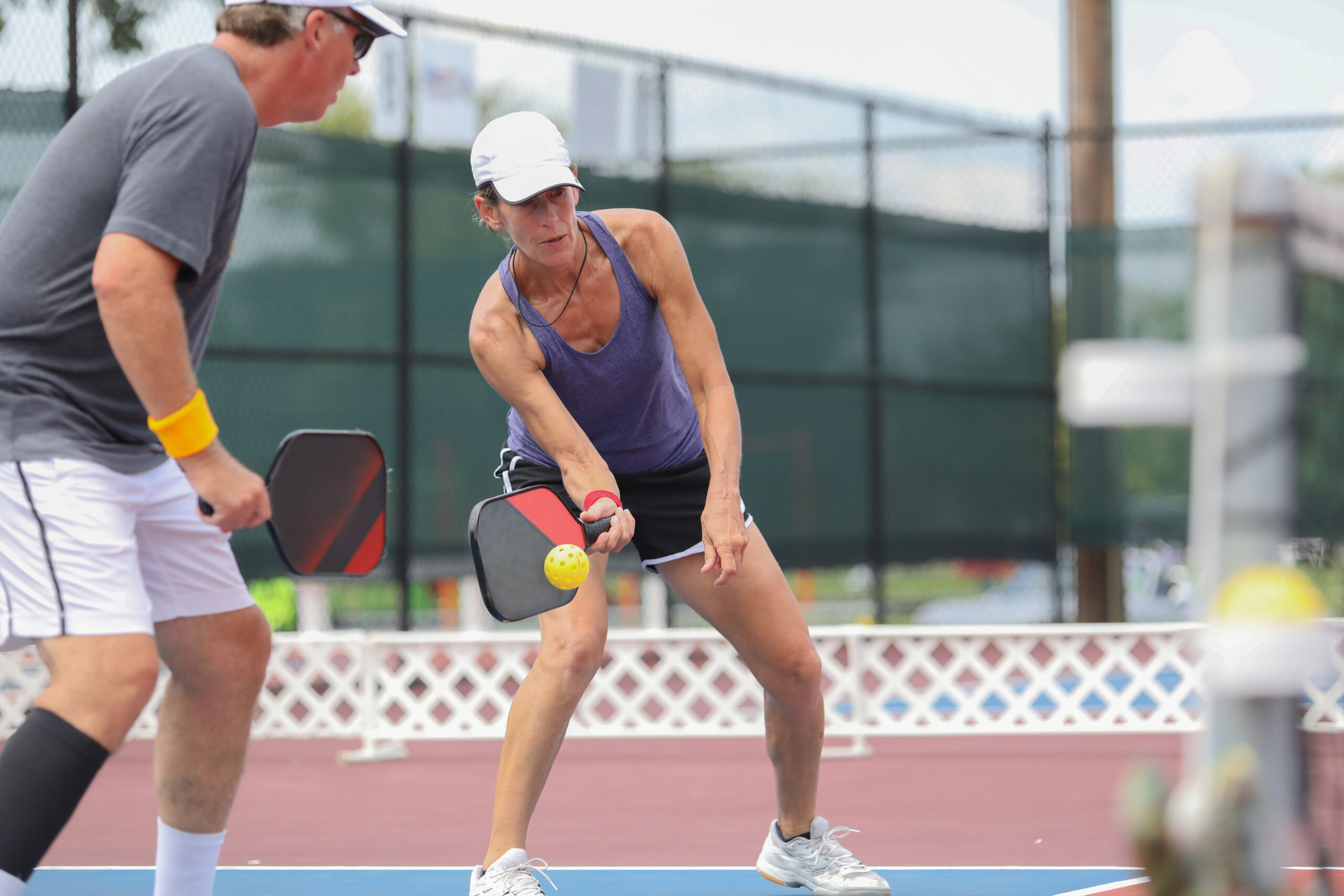
Some of the most common injuries I hear about include shoulder strain, elbow pain (similar to tennis elbow), knee discomfort from twisting or pivoting, calf or Achilles strains, and lower back pain from rotation and reaching.
Research has also shown a steady increase in pickleball-related injuries among adults over 50 in recent years, highlighting how important it is to prepare your body before stepping onto the court.
Strengthen the Right Muscles
The goal isn’t to avoid pickleball. The real goal is to prepare your body so you can keep playing and enjoying it.
Focus on:
- Leg strength for stability and movement (lunges, step-ups)
- Hips and glutes for balance and power (side steps, bridges)
- Core strength for stability and rotation (dead bugs, Russian twists)
- Shoulders and upper back for control and posture (seated rows)
- Calves for push-off and quick movement (heel raises)
- Fast twitch muscles by moving with agility (skaters, toe taps on a step, side steps with a reach)
When these muscles are stronger, your body is better supported during those quick, reactive movements.
3 Simple Stretches to Try
Before and after playing, a few simple stretches can make a big difference:
Calf stretch: Step one foot back, press your heel into the ground, and hold.
Chest and shoulder stretch: Gently open your arms wide or place hands behind your back and lift your chest slightly.
Hip stretch: Sit or stand and gently bring one knee toward your chest.
Hold each stretch for 30 seconds and breathe normally.
 Start Slow and Build Confidence
If you’re new to pickleball, or returning after some time off, ease into it.
Start with shorter games, take breaks, and allow your body time to adjust. Over time, your strength, coordination, and confidence will improve.
Enjoy the Game for Years to Come
Pickleball is a fantastic way to stay active, social, and energized. With the right preparation, it can be something you enjoy for many years.
By strengthening your body, improving your balance, and adding a few simple stretches into your routine, you can reduce your risk of injury and feel more confident every time you step onto the court.
If you’re not sure where to start, even a short conversation with a fitness professional can help you find exercises that feel safe and effective for your body. You can book a 15-minute AIM Fitness Health Consultation at ActivitiesInMotion.ca or by calling 613 869-3246.
In health and fitness,
Meg

Meg Stickl is a certified seniors’ fitness instructor and personal trainer, and the founder of AIM Fitness – Activities in Motion. She helps adults 50+ build strength, confidence, and healthy habits so they can stay active and independent. Meg also hosts Fit Over 50 with Meg on Rogers tv.